
Building a new home is one of the most significant investments you’ll ever make. More and more Twin Cities homebuyers are making sure that investment works harder for them — by choosing green building practices that lower energy costs, improve comfort, and protect the environment for years to come.
When people hear “green building,” they sometimes imagine expensive upgrades or complicated technology. The reality is different — and, for homebuyers in Minnesota, it’s genuinely exciting. Green building today means smarter construction from the ground up: better insulation, high-performance windows, more efficient mechanical systems, and third-party verification that everything performs as promised. The result is a home that costs less to operate, feels better to live in, and holds its value over time.
At McDonald Construction Partners, green building isn’t an add-on. It’s the standard. As a Designated MN Green Path™ Builder, every home we construct is built to exceed Minnesota’s energy code — and independently tested to prove it.
What Is the MN Green Path™ Program?
The MN Green Path™ program is Minnesota’s own green home certification initiative, administered through Housing First Minnesota. It provides a structured, verified pathway for builders to construct homes that go beyond minimum code requirements in energy efficiency, indoor environmental quality, and resource conservation.
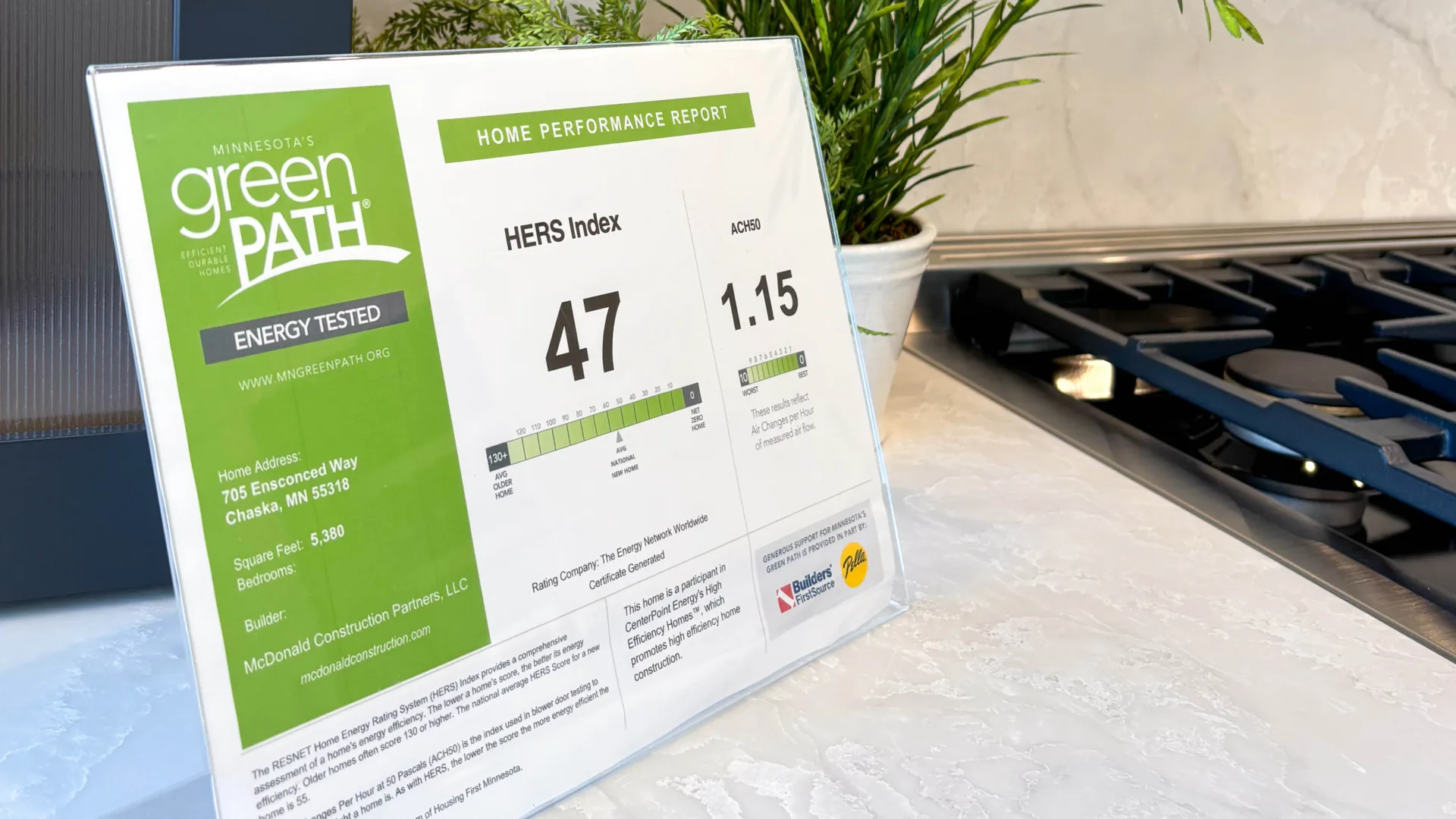
Unlike marketing claims that can’t be measured, MN Green Path™ certification is backed by rigorous third-party testing and verification. Every certified home receives a HERS rating — a Home Energy Rating System score — that objectively measures how energy-efficient the home is compared to a standard reference home.
What is a HERS Rating?
A HERS score of 100 represents a typical new home built to code. The lower the score, the more energy-efficient the home. McDonald Construction’s Green Path™ homes consistently achieve HERS scores of 60 or below — and our Advanced Certified homes come in below 47. Our Ever Green Cottage net-zero home achieved an extraordinary HERS score of -6, meaning it produces more energy than it consumes.
The Three Levels of MN Green Path™ Certification
Level 1
Energy Tested
Energy tested homes are evaluated by a third-party RESNET rater to provide a Home Performance Report and HERS Index Score.
Level 2
Advanced Certified
Homes that achieve this mid-level certification meet rigorous energy testing standards and incorporate additional green features. In order to become Advanced Certified, homes must have a HERS Index below 47.
Level 3
Master Certified
The top level of green building, homes at this level exceed rigorous standards, showcasing the highest commitment to energy efficiency. Master certified homes must receive a HERS Index below 45.
McDonald Construction has homes certified at all three levels, including our award-winning Ever Green Cottage — a 100% electric, net-zero home powered by solar panels and a Tesla Powerwall. We’ve also achieved Advanced Green Path Certification on multiple new construction homes across the Twin Cities, with HERS scores as low as 45.
Why Minnesota’s Climate Makes Green Building Especially Important
Minnesota winters are not subtle. With average January temperatures that routinely dip well below zero in the Twin Cities metro, heating a home efficiently isn’t just an environmental preference — it has a direct, significant impact on your monthly budget and your year-round comfort.
A poorly insulated home loses heat through walls, ceilings, windows, doors, and ductwork. Even in a home that meets minimum building code, these losses add up to hundreds — sometimes thousands — of dollars per year in wasted energy. Green building addresses each of these vulnerabilities systematically, building a home that holds conditioned air in and keeps outdoor extremes out.
Minnesota summers bring their own challenge. A high-performance home envelope that keeps you warm in January does the same work in reverse in July, reducing the load on your air conditioning and keeping your home consistently comfortable even on the hottest days.
What Green Building Looks Like Inside a McDonald Home
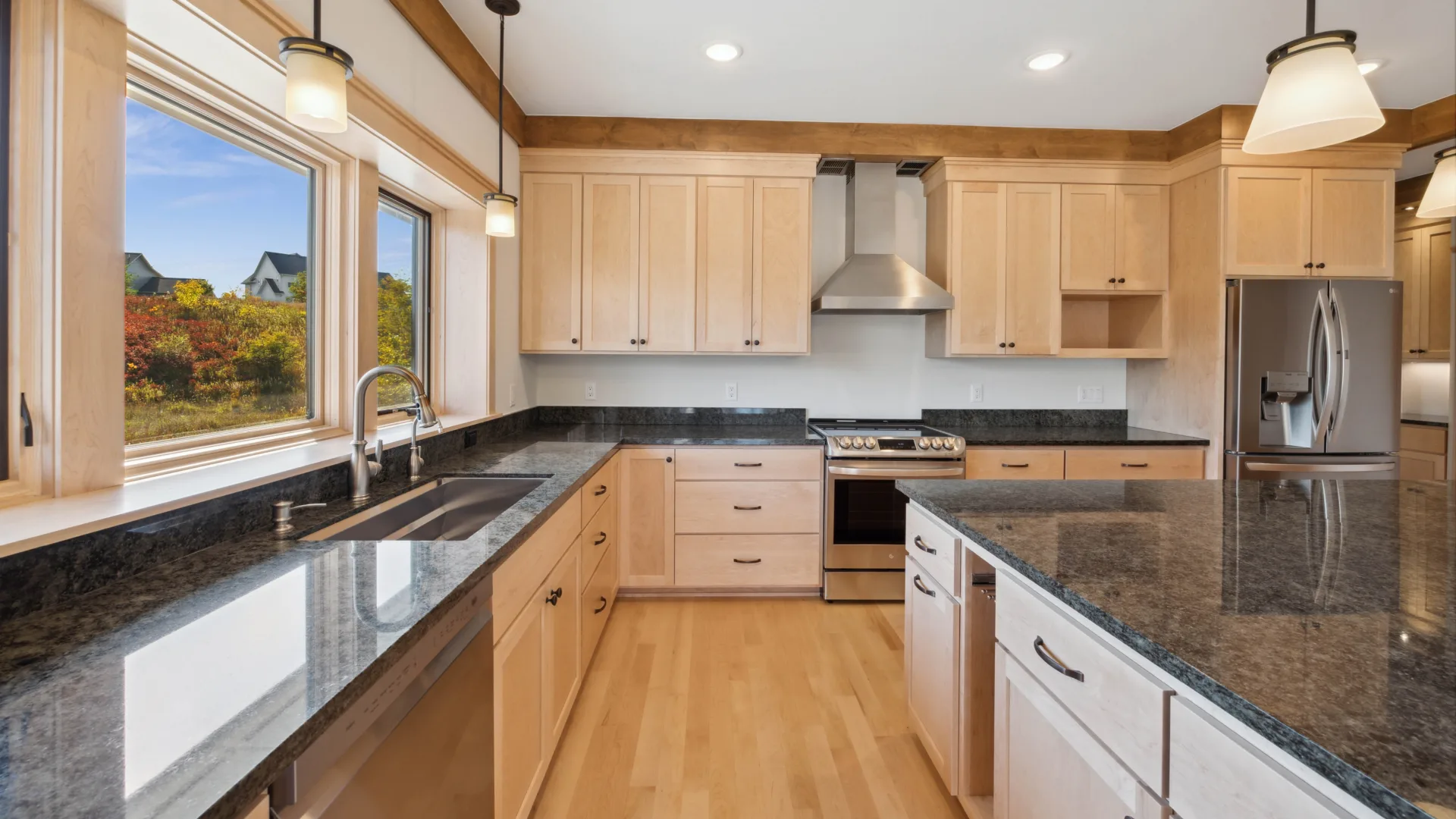
Green building at McDonald Construction isn’t a single feature — it’s a comprehensive system of decisions that work together to create a home that performs at an exceptional level.
The combination of a tight building envelope, sealed ductwork, high-efficiency mechanical systems, and superior insulation means a McDonald green home doesn’t just earn a certification on paper — it delivers measurably lower utility bills and a noticeably more comfortable living environment every single day.
5 Reasons Minnesota Homebuyers Are Prioritizing Green Building
1. Lower Utility Bills, Every Month
This is the most tangible benefit — and for many buyers, the most compelling. A green-certified home uses significantly less energy than a standard new home. Over the life of your mortgage, the cumulative savings in heating, cooling, and electricity costs can be substantial. The more energy-efficient your home, the less you pay every month, regardless of what utility rates do in the future.
2. Consistent Year-Round Comfort
Green building isn’t just about the thermostat number — it’s about how your home actually feels. A home with proper insulation, sealed ductwork, and high-performance windows maintains a more consistent temperature from room to room and floor to floor. No cold corners, no drafty hallways, no rooms that never quite get comfortable. For families spending long Minnesota winters and summers indoors, this difference is felt every single day.
3. Better Indoor Air Quality
The air inside your home matters as much as the air outside — sometimes more. Green building practices include low-VOC materials (volatile organic compounds found in many conventional paints, carpets, and adhesives), passive radon mitigation, whole-house ventilation, and whole-house humidification. The result is a home that breathes cleanly and supports the health of everyone inside.
4. Higher Resale Value and Long-Term Investment Protection
As energy costs rise and green building awareness grows among buyers, homes with documented energy certifications are increasingly attractive on the resale market. A HERS rating and MN Green Path™ certification provide objective, third-party documentation of your home’s performance — a distinct advantage when it comes time to sell. Green homes are built to last and built to perform, which protects your investment for decades.
5. Environmental Responsibility
Minnesota homeowners care about the places they live. Building a green home means a smaller carbon footprint over the life of the structure — less energy consumed, fewer emissions produced, and a house that’s genuinely aligned with the values of people who love this state’s natural beauty. For buyers who want their home to reflect their values, green certification is a meaningful expression of that commitment.
Ready to Build Green in Minnesota?
Whether you’re exploring our current neighborhoods across the Twin Cities, planning a custom home on your own lot, or considering a teardown-rebuild in an established community, McDonald Construction Partners brings the same commitment to green building to every project we undertake.
We’d love to walk you through what green building looks like in practice, what it means for your utility bills, and how we can build the high-performance home you’re looking for.